
ESG Blog
Sustainability Insights
Popular Keywords:
There are 13 results for "Carbon Inventory".
Feb 25, 2026
Taiwan EPA 2026 Latest GHG Emission Factors Are Now Live!
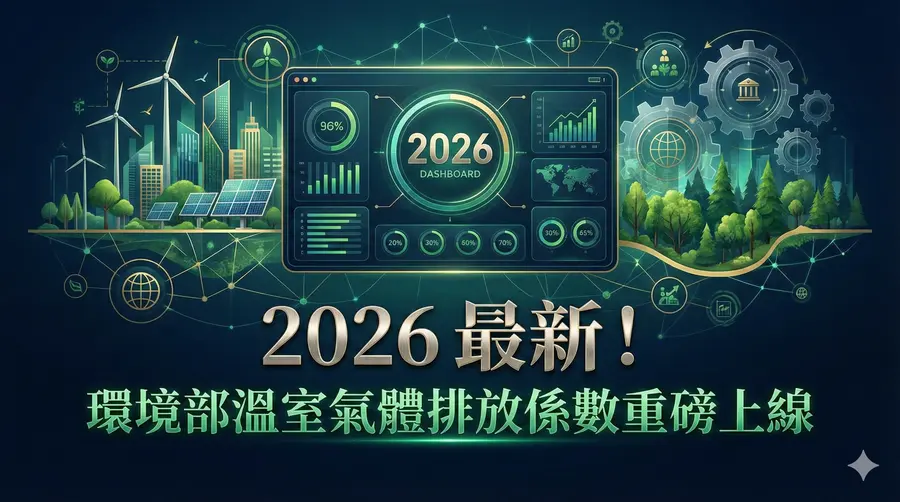
When emission factors are updated, is your carbon inventory in sync? The Ministry of Environment has announced the latest GHG emission factors and average heating values applicable to the 2025 GHG inventory. If enterprises continue using outdated data, systematic deviations in inventory results will occur, affecting internal carbon reduction assessments and risking adjustments during verification.
Feb 12, 2026
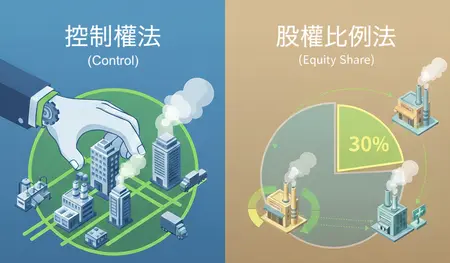
How to Choose the "Boundary Setting Method" for Carbon Inventory? Understanding Control Approach vs. Equity Share Approach
When executing a carbon inventory project, the first task is to define the "organizational boundary." If the boundary is unclear, which emission sources and activity data should be included often lacks consistent standards. This article explains operational control, financial control, and equity share approaches in plain language to help readers choose the appropriate method.
Dec 31, 2025
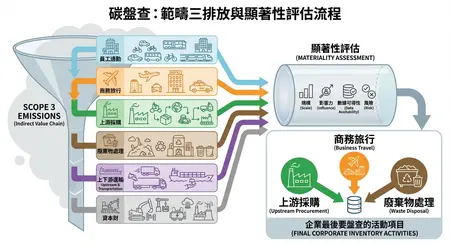
How to Conduct a Carbon Inventory 'Significance Assessment'? A Key Guide for Corporate Sustainability
當企業開始準備碳盤查時,多數承辦人第一反應往往是:蒐集資料、建表、計算。然而真正決定盤查品質與效率的不是「蒐集多少資料」,而是「找出哪些排放源值得蒐集」。這項步驟,被稱為碳盤查的顯著性評估(Significance Assessment)。
顯著性評估可視為整個盤查的方向盤,協助企業辨識高排放、高風險、高關注的核心活動,使後續資料蒐集更聚焦,也避免不必要的時間與人力投入。本文將帶你理解顯著性評估的目的、指標、操作方式,透過系統快速完成鑑別並串接到後續盤查流程。
Dec 03, 2025
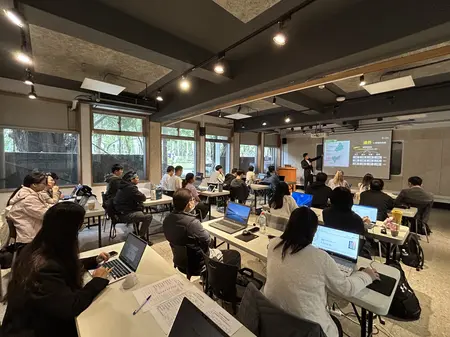
Food & Beverage ESG Promotion Association Partners with Sustaihub: Building Practical ISO 14064 Carbon Inventory Skills to Help Food Industry Create Their Own Inventory from Scratch
As consumers pay more attention to "green dining" and supply chains impose stricter ESG requirements, "sustainability" is no longer just an attractive slogan—it has become a survival issue that the food and beverage industry must face. However, on the road to transformation, working together is better than going it alone. This time, the Food & Beverage ESG Promotion Association (hereinafter referred to as "the Association") partnered with Sustaihub to transform this belief into concrete "data" and "competitiveness." On November 20 and 27, 2025, they invited professional instructors to conduct two ISO 14064-1 carbon inventory practical training sessions for Association members. This was not just a lecture, but a crucial step in helping SMEs in the food industry move from "wanting to do it" to "knowing how to do it," while fulfilling the Association's founding mission: "Every food and beverage brand can create long-term value for the environment, society, and business through sustainable actions."

Nov 26, 2025
How to Approach ESG Disclosure: Common Enterprise Challenges + Complete Digital Tool Guide
Learn ESG disclosure best practices from real consulting experience, and discover how digital tools can dramatically improve efficiency!
Oct 15, 2025
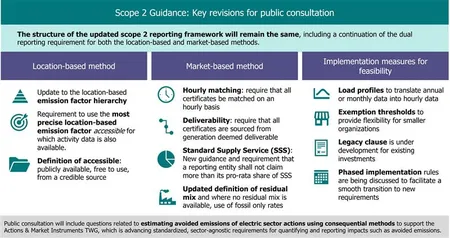
GHG Protocol September 2025 Update: Three Key Implications of Scope 2 Revisions for Corporate Electricity Accounting
The GHG Protocol has announced a revision to Scope 2 guidance, introducing 'hourly matching' and 'deliverability' principles. Future corporate electricity emission calculations will be more rigorous and transparent. This article analyzes the key impacts of this global electricity accounting transformation from three perspectives: revision background, major differences, and response strategies.
Jul 23, 2025
Don't Know How to Conduct Carbon Inventory for Four Industry Types? Taiwan EPA Releases New Calculation Tools and Carbon Inventory Guidelines!
Following the policy direction of the expanded carbon inventory announcement in March this year, Taiwan's Ministry of Environment released greenhouse gas inventory guidelines for four industry types on July 14, covering service industries, transportation, medical institutions, and universities. Additionally, a carbon emission calculation tool was introduced to help businesses preliminarily calculate their carbon emissions. This update is great news for regulated businesses, significantly reducing the administrative costs required for inventory operations. This article will reveal all the details of this information.
Jun 25, 2025
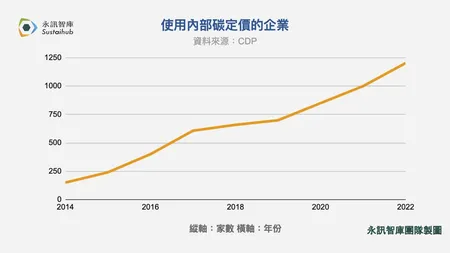
2025 Corporate Carbon Strategy Trends: Internal Carbon Pricing Drives Both Decarbonization and Competitiveness
As global attention to climate change continues to increase, businesses face not only external pressure but also the need for internal transformation. Internal carbon pricing serves as an important tool for corporate sustainable development, helping businesses consider carbon emission costs when formulating strategies, thereby driving the transition to a low-carbon economy. Despite its clear advantages, businesses face a series of challenges during implementation, including internal resistance, resource allocation, and market volatility. This article will explore how internal carbon pricing can help businesses succeed in green transformation and provide specific strategies and recommendations.

Apr 30, 2025
From Trump's Paris Agreement Withdrawal to Taiwan's 2050 Net Zero Anchor: What Are the New Focus Points for Corporate Supply Chain Decarbonization?
In early 2025, Trump claimed he would withdraw from the Paris Agreement again, seemingly weakening global climate governance consensus. In reality, ESG has long become the operational culture of top international enterprises. Taiwan has also anchored its future at this time - President Lai Ching-te explicitly stated at the National Climate Change Response Committee meeting that Taiwan's 2050 net-zero target will not waver with international political developments. More noteworthy is that the Ministry of Environment plans to officially announce carbon sequestration regulations in mid-2025, which will be a turning point for corporate supply chain decarbonization and Scope 3 management. This article analyzes how enterprises should seize this transformation opportunity!
Mar 21, 2025
[2025 Carbon Fee Guide] How Enterprises Can Reduce Carbon Fees from NT$300 to NT$50 Through Voluntary Reduction Plans
With the Climate Change Response Act officially in effect, the carbon fee system has become one of the operational costs that Taiwanese enterprises must take seriously. Companies subject to government-regulated carbon fee collection, including power, gas supply, and manufacturing industries with annual direct or indirect greenhouse gas emissions reaching 25,000 metric tons of CO₂e, will need to pay carbon fees of up to NT$300 per ton of CO₂e. Facing carbon fee pressure, the key for enterprises to reduce payment amounts lies in proposing and passing a 'Voluntary Reduction Plan,' which qualifies them for preferential rates of NT$50 or NT$100 per ton. This article explains how systematic planning and reporting for voluntary reduction plans can not only legally save expenses but also help enterprises with long-term net-zero planning.
- 1
- 2